




Cannes becomes an open-air film set: The White Lotus and Emily in Paris choose the French Riviera
In 2026, Cannes is strengthening its position as an international audiovisual hub: more than 300 filming days have already been authorized, while three major productions are currently transforming the city into a vast film set stretching from La Croisette to Le Suquet, the beaches and the Lérins Islands.
Share News:
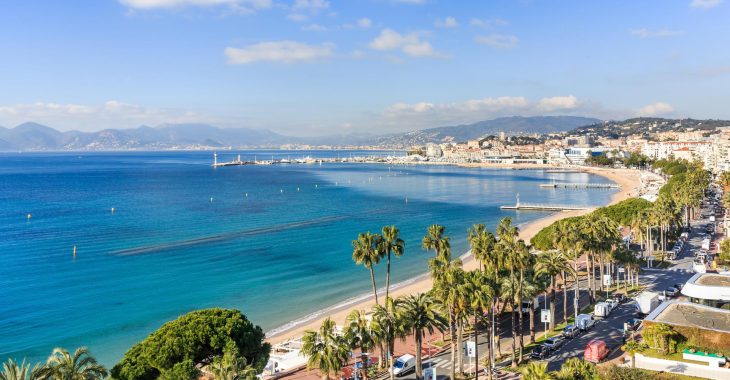
In Cannes, cinema is no longer confined to the famous red carpets of the Festival. Throughout the year, the French Riviera city is increasingly becoming a production location in its own right, chosen by international series and French filmmakers to shoot their projects.
Three productions are currently filming in Cannes at the same time: the fourth season of The White Lotus, the sixth season of Emily in Paris and French director Jean-Christophe Meurisse’s new feature film, La Fête est finie.
According to figures released by the City of Cannes, 310 filming days had already been recorded in 2026, following 419 filming days in 2025, excluding productions carried out at the Georges Méliès Campus studios.
The White Lotus brings Cannes to the screen
One of the most prominent productions currently filming in the city is The White Lotus, the HBO series created by Mike White. After setting previous seasons in Hawaii, Sicily and Thailand, the fourth season has chosen the French Riviera and Cannes as one of its main locations.
More than 50 filming days are planned in Cannes, including at some of the city’s most recognizable landmarks, such as the Palais des Festivals et des Congrès and the Hôtel Martinez.
The production is also expected to generate more than 17,000 overnight stays in local accommodation and involve a wide range of local professionals, from technical crews to the services required to support the production.
The arrival of The White Lotus therefore adds another international setting to the series while placing some of Cannes’ best-known locations on screen.
Emily in Paris returns to Cannes
Cannes is also welcoming back Emily in Paris, the Netflix series that has made France a defining part of its visual identity.
The production has returned to the city for its sixth season, following filming in Cannes in 2025 for the previous season. The return highlights the city’s ability to establish long-term relationships with major international productions rather than simply hosting one-off projects.
The presence of Emily in Paris is part of a wider filming activity involving Cannes as a location for both French and international television productions.
French cinema arrives with La Fête est finie
Alongside major international television productions, Cannes is also welcoming French cinema.
Director Jean-Christophe Meurisse is filming scenes in the city for his new feature film, La Fête est finie. The film explores the world of social gatherings and the cinema environment, offering another perspective on a city that has been closely associated with the film industry for decades.
The simultaneous presence of very different productions highlights the wide range of locations Cannes can offer filmmakers and television crews.
From La Croisette to Le Suquet: a city that can change its scenery
One of Cannes’ main advantages for film productions is the variety of locations available within a relatively compact area.
La Croisette and the Palais des Festivals represent the city’s most recognizable image, but Cannes also offers Le Suquet, the Vieux-Port, Marché Forville, its beaches, Villa Domergue and Sainte-Marguerite Island, as well as residential districts, shops and urban infrastructure.
This diversity allows productions to move relatively quickly between urban environments, Mediterranean landscapes, historic architecture and coastal settings.
It is precisely this combination of locations that supports Cannes’ image as an “open-air studio”, a term used by the city itself to describe its filming strategy.
A dedicated system for welcoming film productions
Cannes’ appeal does not depend solely on its scenery. Over the years, the city has developed a dedicated structure for supporting film and television productions.
Its Film Office helps facilitate administrative procedures, assists with location scouting and connects production companies with local professionals.
This organization is particularly important in a city that hosts congresses, festivals, international events and a significant volume of tourism throughout the year.
Filming requires coordination between production requirements, mobility, commercial activity, security and the everyday lives of residents. According to the City of Cannes, this support begins during the preparation stage of productions in order to coordinate the various stakeholders involved.
Cannes On Air and the development of the audiovisual sector
The growth of filming activity is part of a broader strategy known as “Cannes On Air”, a City of Cannes initiative aimed at developing an audiovisual hub and strengthening the cultural and creative industries in the area.

The project includes training, support for businesses, audiovisual production and the development of new creative activities.
A central role is played by the Georges Méliès University Campus, which opened in 2021 in Cannes La Bocca and focuses on training in fields including screenwriting, image, sound, journalism, cinema and television series.
In 2026, the initiative was further strengthened with the Cannes On Air Consortium, a network bringing together 102 cultural and creative industry stakeholders and working on areas such as innovation, training, artificial intelligence in audiovisual production and the attractiveness of the region for productions and creative companies.
From Festival city to a city where films are made
The phenomenon reflects an evolution in Cannes’ audiovisual identity. The Cannes Film Festival remains the city’s most important international event associated with cinema, but alongside the annual festival an ecosystem dedicated to production and training has developed.
The number of filming days and the simultaneous presence of French and international productions illustrate how Cannes is increasingly used not only as a symbol of cinema, but also as a real production location.
From La Croisette to Le Suquet, from the beaches to the Lérins Islands, from hotels to urban infrastructure, the city offers filmmakers a wide variety of settings.
And as cameras continue to roll, Cannes is strengthening a vocation that goes beyond the red carpet: becoming a genuine film and television city on the French Riviera.
Latest news
You might also be interested in:


15 March 2024


Latest Articles
18 September 2026

17 September 2026

17 September 2026

17 September 2026

17 September 2026

16 September 2026
Most Read Articles

24 January 2024
28 January 2026

28 January 2026
17 September 2026

16 September 2026