




Pubblicato il 15 September 2026 da Redazione in Actuality, Antibes, Cannes, French Riviera, Italy and Monaco, Menton, Monaco, Nice
Tenda Pass Tunnel to Close from September 21 to October 29: Accelerated Works Aim for November Reopening
The Tenda Pass tunnel will close completely earlier than initially scheduled, from September 21 to October 29, to allow work on the French side to be concentrated and accelerated. The aim is to complete the main works before winter and ensure smoother traffic from November.
Share News:
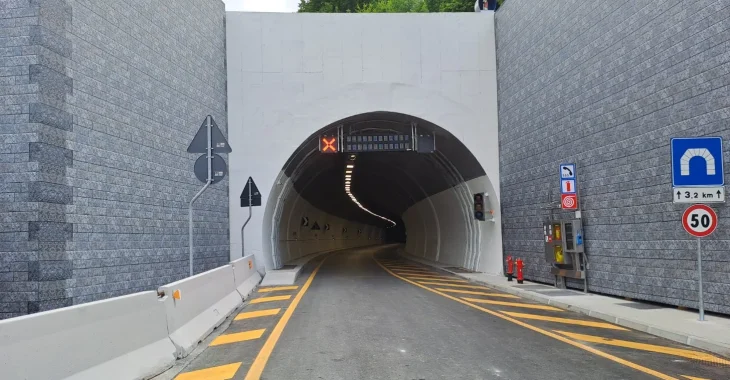
Tenda Pass Tunnel Closure Brought Forward
The Tenda Pass tunnel is preparing for another complete interruption of traffic. The closure, initially scheduled to begin on October 5, has been brought forward to Monday, September 21, and is expected to remain in place until October 29 inclusive.
The decision was taken as part of the coordination between Italy and France and was endorsed by the monitoring group that met on September 11 in the Province of Cuneo. The aim is to concentrate the most complex works into a single period, taking advantage of the progress already made on the construction site and completing a significant part of the project by the end of October.
The earlier closure is also linked to positive developments: work on the French side is progressing faster than expected, helped by favourable weather conditions during the summer.
For the Edilmaco consortium, which is responsible for the works, the closure provides a valuable window to carry out interventions that would not be compatible with regular traffic.
Why Is the Tenda Pass Closing Earlier?
The works include the final bends leading to the tunnel on the French side, as well as a number of extraordinary maintenance operations.
These activities require safety conditions that are difficult to reconcile with normal traffic. Bringing the closure forward will therefore allow the work to be concentrated within a defined period and reduce the risk of further disruptions in the following months.
The strategy is clear: close earlier in order to try to reopen earlier, completing a decisive part of the construction work by the end of October and aiming for less restrictive traffic management from November onwards.
A Key Link Between Piedmont and the French Riviera
The closure of the Tenda Pass tunnel affects a strategically important cross-border route.
The Tenda Pass is one of the main toll-free road connections between Piedmont and the Roya Valley, linking the Cuneo area and Limone Piemonte with the French side, including Breil-sur-Roya and Menton.
Italy’s State Road 20 continues across the border as France’s RD 6204. For residents, commuters, businesses and tourism operators, the tunnel has long been an essential link between the two sides of the Alps.
Its importance has become even more evident following the difficulties that have affected the Roya Valley in recent years, including the consequences of Storm Alex and repeated disruptions to road connections.
The New Tunnel and the Second Tube Project
The Tenda Pass project is part of a long-term Franco-Italian infrastructure programme designed to progressively replace the old 19th-century tunnel.
The new Tenda tunnel is already in operation, while in July ANAS approved the executive project for the expansion and modernisation of the historic tube, with an estimated investment of around €140 million.
The project aims to transform the old tunnel into a modern one-way structure as well. The final configuration will therefore consist of two one-way tubes, designed to make the international connection safer and more efficient.
The Final Week Before the Closure: Restricted Traffic

The complete closure on September 21 will be preceded by a week of significant traffic restrictions.
From September 14 to 20, on weekdays, the tunnel will only be accessible during the following time slots: 6–8 am, 12.30–1.30 pm and 6–9 pm. On Saturdays and Sundays, it will remain open from 6 am to 11 pm.
During this period, traffic will continue to be regulated through alternating one-way traffic controlled by traffic lights.
The existing restrictions will also remain in force. Vehicles weighing more than 3.5 tonnes, buses, bicycles and pedestrians will not be allowed to use the tunnel, nor will vehicles transporting dangerous goods.
From September 21, however, the road connection will be completely closed.
The Challenge of Reopening in November
Bringing the closure forward follows a precise strategy: concentrating the works between September and October in order to reduce, as far as possible, the risk of further disruption during the following months.
The stated objective is to reopen the tunnel by the end of October, with the aim of reaching November under more favourable traffic conditions and with fewer restrictions than those currently in place.
For the areas concerned, this is a particularly important deadline.

On one side is the Roya Valley, where the connection with Italy is considered vital infrastructure for everyday mobility and the local economy. On the other are the Cuneo area and western Liguria, which use the Tenda route as one of the most direct gateways to France and the French Riviera.
The Cross-Border Mobility Challenge
Given the strategic importance of the route, the monitoring group accompanied the decision to bring forward the closure with a clear requirement to respect the new timetable.
Another key issue is coordination with the international Cuneo–Limone–Tenda–Ventimiglia railway line. The aim is to avoid, as far as possible, overlapping the road closure with other planned railway disruptions.
A simultaneous interruption of both connections could significantly reduce the alternatives available for travel between Italy and France, particularly affecting commuters, residents and local businesses.
Different Dates on Official Calendars: Which One Will Be Final?
There is also an important detail that makes it essential to follow official updates in the coming weeks.
The tunnel’s official website still displays the previous schedule, which indicated that the closure would begin on October 5. However, the latest information from local authorities and the Franco-Italian coordination system points to September 21 as the new starting date for the complete closure.
The new timetable therefore aims to concentrate the works and take advantage of the progress already made on the construction site in order to reduce the overall duration of the intervention.
The Tenda Pass is closing earlier than expected with a clear objective: complete the most critical works as quickly as possible and reopen the route in November with a more efficient connection between Piedmont and France. The real challenge now will be sticking to the timetable.
Latest news
You might also be interested in:

3 September 2024
21 January 2025
14 July 2025

24 February 2026
Latest Articles

15 September 2026

15 September 2026

15 September 2026

14 September 2026

14 September 2026

14 September 2026
Most Read Articles

24 January 2024

28 January 2026

28 January 2026

11 September 2026