




Pubblicato il 19 November 2026 da Redazione in Actuality, Actuality in Monaco, Events, Holiday, Lifestyle, Monaco
Monaco National Day 2026: The Principality Celebrates Its History with Traditions, Honours and New Developments
On 19 November, Monaco celebrates its National Day with religious ceremonies, official honours and military parades. The 2026 edition also marks the 60th anniversary of the Prince’s Carabiniers Orchestra, alongside initiatives that bring together tradition and contemporary culture.
Share News:
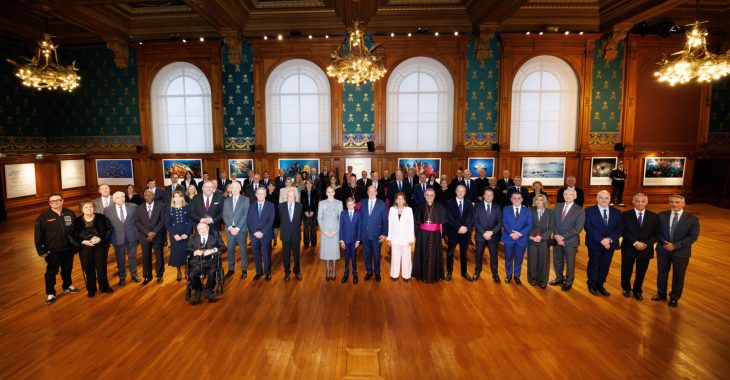
Every year, Monaco’s National Day transforms the Principality into a vibrant stage for celebrating its history, identity and institutions. The streets are adorned with red and white flags, the colours of the Monegasque flag, while official ceremonies, religious celebrations and public events bring together the Princely Family, institutions and residents.
The celebrations take place on 19 November, a date that has acquired a special significance during the reigns of Rainier III and Prince Albert II. The 2026 edition combines the traditional elements of the Fête Nationale with several noteworthy occasions, including the 60th anniversary of the Prince’s Carabiniers Orchestra.
Red and white flags: the colours of Monaco
In the days leading up to National Day, Monaco is decorated with the Principality’s national colours. Red and white flags appear on balconies, buildings and public spaces, creating a festive atmosphere throughout the country.
The arrangement of the colours follows a precise protocol: on horizontal flags, red is placed above white; on vertical flags, red appears to the left of white when viewed from the outside.
The origins of Monaco’s National Day: a tradition linked to the Sovereign
The Fête Nationale has its origins in the tradition of celebrating the patron saint of the reigning Sovereign. Under Prince Rainier III, 19 November became associated with Saint Rainier in 1952.
When Prince Albert II succeeded his father in 2005, he chose to retain the same date, rather than introduce a new celebration linked to his own name day. This decision ensured continuity with the previous reign and reinforced the historical identity of Monaco’s National Day.
Official honours: recognising service to the Principality
One of the most important moments of the celebrations is the presentation of official distinctions to individuals who have distinguished themselves through their service to Monaco and its community.
The honours include the Order of Saint-Charles, the Order of Grimaldi, the Order of Cultural Merit, the Medal of Physical Education and Sport, the Medal of Labour and the Medal of Honour for Voluntary Service.
The ceremonies take place in the presence of Prince Albert II, accompanied by his sisters, Princess Caroline of Hanover and Princess Stéphanie, as well as representatives of the Principality’s institutions.
These distinctions recognise contributions in a wide range of fields, from public service and culture to sport, education and voluntary work.
Fireworks at Port Hercule on the eve of National Day
The celebrations traditionally begin on the evening of 18 November with a fireworks display in the Port Hercule area.
Despite the wind, the fireworks illuminate the Monegasque sky, offering residents and visitors a spectacular opening to the National Day festivities.
19 November: the programme of official ceremonies
The main celebrations take place on 19 November, with a series of religious, institutional and military events.
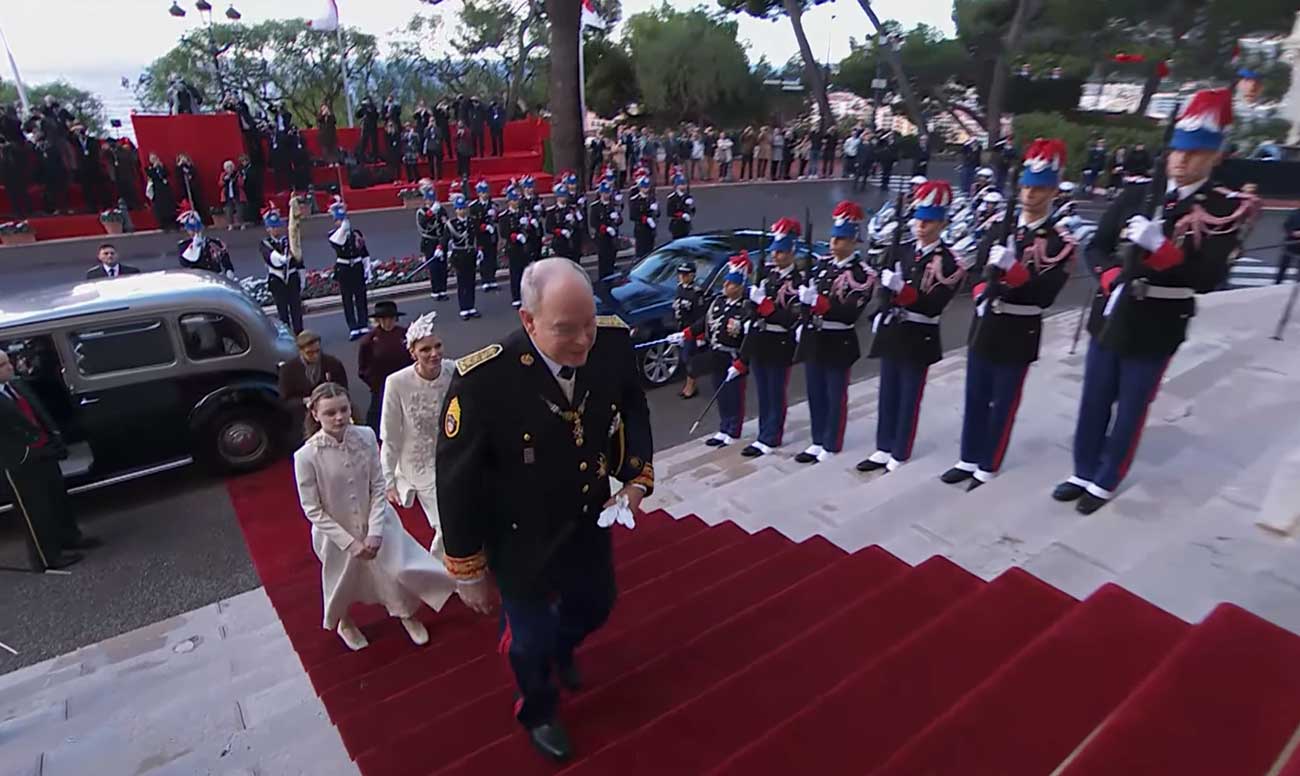
At 9.30 am, the day begins with a Thanksgiving Mass at Monaco Cathedral. The official programme then continues at the Cour d’Honneur of the Prince’s Palace, where the military ceremony and the presentation of honours take place.

The celebrations also include a military parade, one of the most eagerly anticipated moments of the day, bringing together the various units involved in the Principality’s official ceremonies.
The Prince’s Carabiniers: guardians of the Sovereign and the Palace
The Prince’s Carabiniers play a central role in Monaco’s National Day celebrations. Their duties include protecting the Sovereign Family and the Prince’s Palace, as well as taking part in official ceremonies and state occasions.
Their presence represents one of the most recognisable symbols of the Principality’s institutional history and traditions.
The 60th anniversary of the Prince’s Carabiniers Orchestra
The 2026 celebrations are particularly significant for the Prince’s Carabiniers Orchestra, which marks its 60th anniversary.
Founded in 1966 at the initiative of Prince Rainier III, the orchestra has become an integral part of Monaco’s official and cultural life. Over the decades, it has accompanied important ceremonies and contributed to the musical identity of the Principality.
The anniversary provides an opportunity to celebrate its history and the musicians who have helped preserve this tradition through performances and tributes.
A different parade route due to renovation work at the Palace

The 2026 edition also features an organisational adjustment to the military parade. Due to renovation work at the Prince’s Palace, the route has been modified and will run between rue Bellando de Castro and rue des Remparts.
The change allows the traditional parade to take place while taking account of the work currently being carried out at the Palace.
The Garden Club celebrates “Comme un jardin”
Alongside the official ceremonies, Monaco’s National Day is also an opportunity to highlight the Principality’s cultural and creative initiatives.
The Garden Club, chaired by Princess Caroline of Hanover, with Cecilia Casiraghi as vice-president, presents the theme “Comme un jardin”.
The artistic direction is entrusted to Frédérique de Chambure and Rosella Zenere. The project celebrates the relationship between nature, creativity and beauty, adding a distinctive artistic dimension to the National Day programme.
Monaco National Day 2026: a celebration between heritage and modernity
Monaco’s National Day remains one of the most important occasions in the Principality’s calendar. It is a moment when history, institutions and community life come together in a celebration that brings residents and visitors closer to the country’s identity.
The 2026 edition once again highlights the value of traditions passed down through generations, while also recognising the people and organisations that contribute to Monaco’s cultural and social life.
Between religious ceremonies, official honours, military parades and cultural initiatives, the Fête Nationale offers a portrait of a Principality that looks to the future while remaining deeply connected to its history.
Latest news
You might also be interested in:


31 January 2026


Latest Articles
19 November 2026

19 November 2026

18 November 2026

18 November 2026

18 November 2026
18 November 2026
Most Read Articles

24 January 2024
28 January 2026
18 November 2026

28 January 2026
19 November 2026