




Lumières sur la Justice 2026 in Grasse: Three Days Exploring Justice Through Theatre, History and Human Rights
From 19 to 21 November, Grasse hosts the first edition of the “Lumières sur la Justice” festival, an event bringing the public closer to the world of justice through theatrical performances, exhibitions, cinema, conferences and an international parade featuring thirty lawyers' robes from around the world.
Share News:
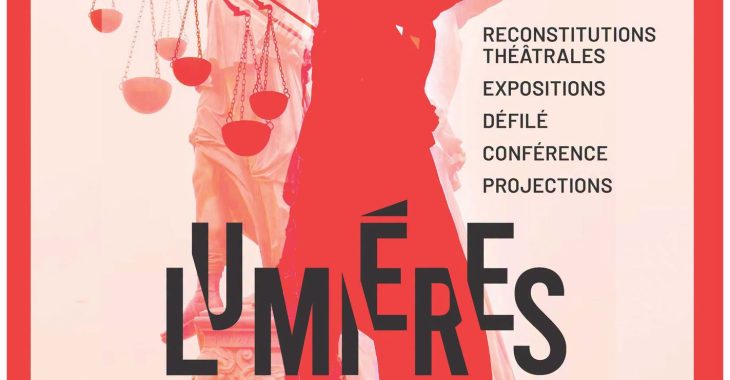
For three days, Grasse will become a meeting point for justice, culture and collective memory. From 19 to 21 November 2026, the French Riviera city will host the first edition of “Lumières sur la Justice”, a festival designed to bring citizens closer to the judicial world by exploring its history, key figures and role in protecting fundamental rights.
The programme goes beyond the traditional boundaries of courtrooms. Historical trials recreated on stage, film screenings, photographic exhibitions, meetings with experts and events dedicated to the history of the legal profession will give visitors the opportunity to discover the workings and evolution of justice from a new perspective.
Events will take place at three emblematic venues in Grasse: the Palais de Justice, the Théâtre de Grasse and the Médiathèque Charles Nègre. Together, these locations will become spaces for dialogue between institutions, culture and society.
A festival bringing justice closer to the public
“Lumières sur la Justice” is an initiative supported by Grasse Mayor Jérôme Viaud and conceived by David Nitlich, president of the Évidences association; lawyer Basile Ader, former vice-president of the Paris Bar Association; and Emmanuelle Bourret, director of the Théâtre de Grasse.
The festival is organised in partnership with several major legal institutions, including the National Council of French Bar Associations, the Grasse Court and the Grasse Bar Association.
Its aim is to help the public understand a world that is often perceived as distant and complex, highlighting the importance of judicial discourse and the connection between justice, freedom and democracy.
“We want to throw open the doors of the courthouse to show the power of judicial speech, collective memory and fundamental freedoms,” explains Basile Ader.
The initiative takes on particular significance in light of the restrictions governing the documentation of judicial proceedings. Since 1954, photography and television filming inside French courtrooms have been prohibited, except in specific circumstances and subject to special authorisation. The festival therefore offers alternative ways of presenting the judicial world and making it accessible to people who do not usually enter these institutions.
Opening at the Palais de Justice: thirty lawyers’ robes from around the world
The festival will officially open on Thursday, 19 November, at the Palais de Justice in Grasse. The inauguration is scheduled for 6.30 pm, followed at 7 pm by one of the event’s most distinctive highlights: an international parade featuring thirty lawyers’ robes from different countries.
This symbolic event will celebrate the legal profession and its traditions, showcasing different legal cultures and identities through their ceremonial attire.
At 8 pm, the programme will continue with “Le Procès de Bobigny”, a theatrical reconstruction of the 1972 trial that marked a turning point in the campaign to legalise abortion in France. The case became a landmark in the history of women’s rights and offers an opportunity to reflect on the relationship between justice, society and legislative change.
From the Manouchian trial to Marie Antoinette: history brought to life through theatre
On Friday 20 and Saturday 21 November, the Théâtre de Grasse will become the main venue for the festival’s theatrical programme. The stage will host performances dedicated to landmark trials that have left their mark on French history.

One of the highlights will be “Le Procès Manouchian”, focusing on the trial of the resistance group led by Missak Manouchian, made famous in particular by the iconic Affiche rouge poster. The story recalls one of the most significant chapters of the French Resistance during the Second World War and invites reflection on memory, civic commitment and freedom.
The Bobigny trial will also return to the stage in a new performance, while Saturday evening will feature “Le Procès de Marie-Antoinette”, exploring the trial of the French queen during the Revolution.
This production will stand out for its unusual format: odorama. The theatrical reconstruction will be accompanied by an olfactory experience created in collaboration with Maison Sozio, a historic Grasse-based fragrance laboratory.
This original approach highlights the connection between the festival and Grasse’s identity as the world capital of perfume, introducing an unusual sensory dimension to the retelling of judicial history.
Conferences and cinema at the Médiathèque Charles Nègre
The Médiathèque Charles Nègre will host an important part of the programme dedicated to historical insights and contemporary issues surrounding justice.
Among the scheduled events is the conference “Guillotinées”, presented by historian Cécile Berly, which will invite the audience to explore the history of women sentenced to the guillotine.

Cinema will also play a central role with a screening of the documentary “Iran, plaidoyer pour la justice”. The director and producer, Hirbod Deghani Azar, will attend the event and take part in discussions and debates with the audience.
The documentary will provide an opportunity to examine the issue of justice in Iran and broader questions concerning rights and freedoms, extending the festival’s perspective beyond France.
Three exhibitions exploring the history of the legal profession
The “Lumières sur la Justice” programme will also feature three exhibitions offering different perspectives on judicial history and the legal profession.
“Clichés d’audiences” will focus on photographs of court hearings, providing a visual insight into the settings and moments that shape judicial proceedings.
“Les Avocats pendant la guerre” will explore the role of lawyers during wartime, highlighting the challenges and responsibilities faced by members of the profession during a particularly difficult period in history.
Finally, “Les Femmes avocates” will focus on women’s presence and development within the legal profession, tracing their professional achievements and the gradual establishment of their place in the judicial world.
Grasse brings together justice, culture and local identity
The choice of Grasse as the host city for the first edition is no coincidence. Internationally renowned for its perfume-making heritage, the city once again demonstrates its cultural vocation and its ability to promote initiatives that bring together different forms of heritage and expertise.
The collaboration with Maison Sozio on the olfactory component of the Marie Antoinette performance is a concrete example of this dialogue between local identity and cultural innovation.
The festival brings together institutions, legal professionals, artists and citizens, with the aim of making legal culture an integral part of public life.
“Lumières sur la Justice”: a first edition set to travel across France
The event taking place from 19 to 21 November 2026 will be the first edition of “Lumières sur la Justice”, a project designed to be presented in other French cities in the future.
Grasse will therefore have the honour of launching an initiative that aims to reach beyond local boundaries and create new opportunities for dialogue between the judicial world and society.
For three days, the Palais de Justice will be more than a place reserved for legal professionals. It will become a public space where theatre, history, cinema and debate come together to explore the importance of justice and fundamental rights.
An original cultural event offering a fresh perspective on one of democracy’s essential institutions, in the heart of one of the French Riviera’s most distinctive cities.

Latest news

You might also be interested in:


5 June 2024

Latest Articles
19 November 2026

19 November 2026

19 November 2026

18 November 2026

18 November 2026

18 November 2026
Most Read Articles

24 January 2024

28 January 2026
18 November 2026

28 January 2026
19 November 2026